When to Specify Timber Doors

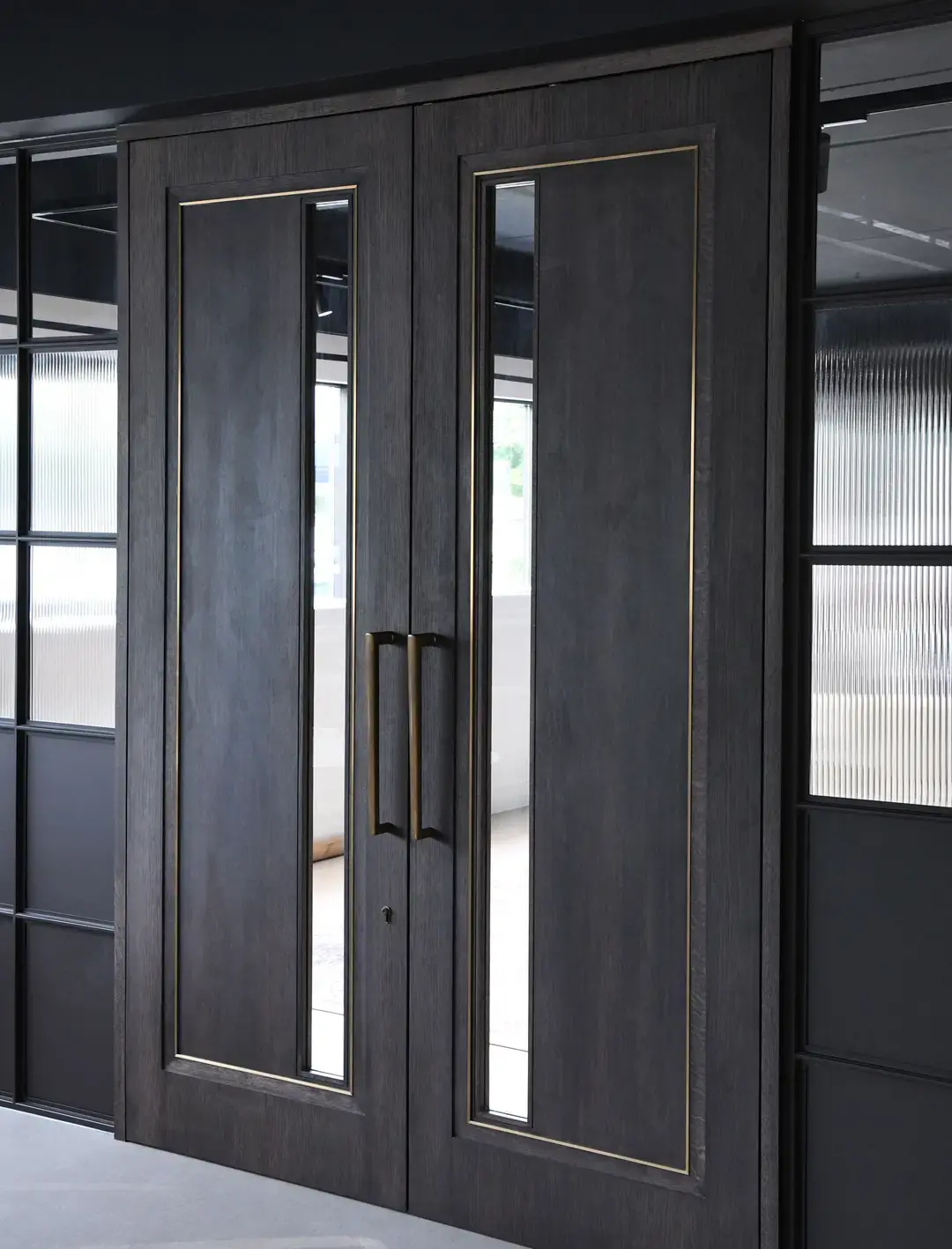
Getting the detail right before it becomes a constraint
Timber doors are not a standalone element
Timber doors are often perceived as one of the more straightforward components within a building. They are familiar, widely specified, and appear across almost every project typology, from residential developments through to commercial and hospitality schemes.
That familiarity can be misleading.
A timber doorset does not sit in isolation. It forms part of a wider construction system, interacting directly with wall build-ups, structural openings, finishes, services, and performance requirements. The door itself is only one part of the equation. The success of the installation is determined by how well the entire system has been understood and coordinated.
In practice, most issues attributed to timber doors are not caused by the product, but by the point at which it is considered within the design and construction process.
The typical point of specification
On many projects, timber doors are specified once layouts have been fixed and finishes are being developed. At this stage, room functions are defined, opening sizes are known, and the project is moving into detailed coordination.
This feels like a logical point to make decisions. The building is taking shape on paper, and there is a natural desire to progress specifications in line with that clarity.
However, by this stage, a number of critical constraints have already been established. Wall constructions have been agreed, structural openings have been set, and tolerances are effectively locked in. Service routes have often been designed and, in some cases, installed.
At this point, the doorset is required to fit within a series of predefined conditions. It is no longer influencing the design. It is responding to it.
This shift, from influencing to accommodating, is where complexity begins to increase.
Doorsets as integrated systems
A timber doorset should always be approached as a coordinated system. It comprises the door leaf, frame or lining, ironmongery, seals, and the interface with adjacent finishes.
Each of these components has its own requirements, and each relies on alignment with the surrounding construction.
Flush doors, for example, demand a high level of precision between the frame and the finished wall surface. Small variations in plaster thickness, setting out, or alignment can result in visible shadow gaps, inconsistent margins, or a loss of the intended clean line.
Sliding door systems require an even greater level of foresight. Pocket systems are built into the wall construction, which means the slide kit must be installed during the drylining stage. The door leaf itself is typically installed later, once plastering is complete and finishes are protected. This staged approach works well when planned, but without early coordination it can introduce conflicts with services, insufficient wall depths, or structural limitations that are difficult to resolve retrospectively.
Hinged doors, although more traditional in appearance, are not exempt from these considerations. Frame tolerances, architrave details, and ironmongery positioning all require accurate allowances. When these elements are assumed rather than coordinated, site adjustments become necessary, often affecting both programme and finish quality.
These challenges are not unusual. They are a direct consequence of the doorset being introduced after the surrounding construction has already been defined.
Performance requirements and compliance
Performance is often where late-stage specification becomes most problematic.
Fire-rated timber doorsets must be specified and installed as complete, tested assemblies in accordance with standards such as BS EN 1634. Every component within the doorset, including the leaf, frame, seals, hinges, and ironmongery, contributes to that certification.
Substituting individual elements, even where they appear similar in specification, can compromise compliance. This is not always immediately visible, but it carries significant risk from both a regulatory and liability perspective.
Acoustic performance follows a similar principle. Achieving meaningful sound reduction is dependent on more than the door leaf alone. The effectiveness of the seal, the rigidity of the frame, and the accuracy of installation all play a role.
Higher levels of performance typically require thicker door leaves, tighter tolerances, and more comprehensive sealing strategies. These factors influence wall depths, opening sizes, and installation methods. If they are introduced late, they can necessitate changes to elements that have already been agreed, leading to redesign, delay, or compromise.
Tolerances and buildability
Tolerance is one of the least visible yet most critical aspects of timber door specification.
Doorsets rely on controlled and consistent gaps to function correctly and to achieve the intended visual outcome. These tolerances must be considered in relation to wall build-ups, floor finishes, and structural openings from the outset.
If allowances are not made early, achieving these tolerances on site becomes increasingly difficult. This can result in doors that do not align correctly, inconsistent shadow gaps, or challenges in achieving the desired level of finish.
Buildability is closely linked to this. A well-coordinated doorset should be straightforward to install within the context of the wider build programme. Where coordination is lacking, installation becomes reactive, with adjustments being made on site rather than resolved through design.
Installation sequencing and programme impact
Installation sequencing plays a significant role in the successful delivery of a doorset.
Different systems require different approaches. Sliding systems, particularly those integrated into wall constructions, benefit from a phased installation. The structural components are installed early, typically during drylining, while the visible elements are introduced later once finishes are complete. This protects the final product and allows for greater accuracy in alignment.
Hinged doors may be installed at different stages depending on the project programme, but still require careful coordination to ensure that frames, finishes, and ironmongery align correctly.
Without a clear understanding of sequencing, there is a risk of rework, damage to finished elements, or delays to programme. These are rarely the result of a single issue, but rather a series of small misalignments that accumulate over time.
Programme alignment and realistic lead times
Early specification should be supported by realistic programme planning.
Allowing approximately six months from deposit to delivery provides the necessary time to fully coordinate the doorset with the wider project. This period allows for detailed design development, technical review, and alignment between all parties involved.
It also provides an opportunity to resolve interfaces properly, rather than relying on site-based adjustments.
Shortened lead times can place pressure on decision-making and increase the likelihood of compromise. A considered approach to programme planning supports a more consistent and reliable outcome.
The advantage of early coordination
Specifying timber doors earlier does not require every detail to be fixed at concept stage. It requires an understanding of the system and its implications before key decisions are locked in.
At developed design stage, this enables the project team to align wall constructions with frame requirements, accommodate door thickness and tolerances, and coordinate ironmongery with structural openings. It also allows performance requirements to be properly integrated and installation sequencing to be planned in a way that supports the overall programme.
This level of coordination reduces risk, improves buildability, and supports the delivery of the intended design.
A considered approach
Timber doors are present in almost every space within a building, yet they are rarely the focus of early design discussions.
Their impact is subtle but consistent. They influence how spaces connect, how they feel, and how effectively the building performs.
When they are considered early, they integrate naturally with the architecture and contribute to a cohesive result. When they are introduced late, they are often required to adapt to constraints that were never designed around them.
The difference lies not in the product, but in the timing and quality of coordination.
If you are working on a project at concept or developed design stage, now is the point to review how your timber doors will integrate with the wider scheme.
We can support with early-stage coordination, reviewing layouts, wall build-ups, and installation sequencing to ensure everything aligns before constraints are locked in.
Get in touch with our team to discuss your project, or book a CPD session for a more detailed look at timber door specification and best practice.